Advertisements
Top weekly article
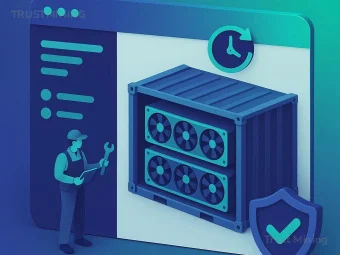




Mining Farm is a group of mining hardware, power systems, cooling systems, networking equipment, and management tools organized for the simultaneous operation of multiple mining devices.
In a small setup, a farm may consist of only a few devices located in one room. At industrial scale, it can include hundreds or thousands of miners distributed across racks, containers, or dedicated areas. A mining farm therefore represents more than a collection of mining hardware: it is an infrastructure system designed to keep the equipment operating continuously.
Components of a Mining Farm
The exact configuration depends on the scale of the operation and the type of equipment being used. A mining farm commonly includes:
- ASIC miners, GPU miners, or other computing devices;
- electrical distribution and protection equipment;
- cooling and heat-removal systems;
- networking equipment and internet connectivity;
- monitoring and remote management systems;
- structures for mounting and organizing equipment;
- backup infrastructure supporting high uptime.
How a Mining Farm Operates
Each miner performs its own computational work while the infrastructure provides power, cooling, networking, and monitoring. The equipment may connect to a mining pool or operate through another mining method.
As the number of devices increases, computing power is no longer the only limiting factor. The operator must also provide sufficient power capacity, heat removal, network connectivity, and maintenance access.
Scaling a Mining Farm
Adding miners increases more than the total hashrate. It also increases electrical and thermal loads. If the electrical or cooling infrastructure is not designed for the additional load, the farm may be unable to operate all installed devices continuously.
Large facilities therefore plan electrical capacity, cooling capability, network infrastructure, and infrastructure reserves before expanding the number of miners.
Key Infrastructure Factors
| Component | Practical role |
|---|---|
| Power system | Determines how much equipment can be operated safely. |
| Cooling | Removes heat and helps maintain acceptable operating temperatures. |
| Network | Connects miners with pools and management systems. |
| Monitoring | Helps detect failures and abnormal operating conditions. |
| Equipment placement | Determines density, airflow, and maintenance access. |
A mining farm is therefore an integrated infrastructure system in which computing hardware is only one component. Its practical performance depends on how well power, cooling, networking, physical layout, and management systems work together.
Popular models

Brands


Aisen

iPollo

Bitdeer

ElphaPex

Heatbit

Jasminer

Ebang

Todek

Canaan

Braiins

VolcMiner

Bitfily

Baikal

StrongU

MicroBT

Lucky Miner

Innosilicon

IceRiver

Hummer Miner

Auradine

Goldshell

Bitaxe

FusionSilicon

ForestMiner

Bolon Miner

Dayun

Holic

Digital Shovel

Pantech

BW

Bitfury

Spondoolies

PinIdea

Obelisk

DragonBall Miner

FFMiner

GMO miner

Halong Mining