Advertisements
Top weekly article
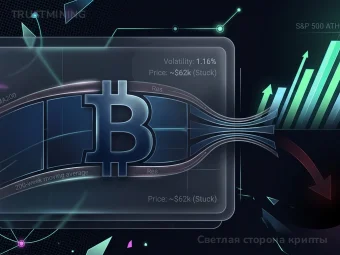

Светлая сторона крипты
Ветры зимы в криптосфере
Почему биткоин застрял на месте, пока фондовый рынок бьет рекорды



Smart contract is a program deployed on a blockchain or its execution environment that performs predefined logic when it receives appropriate inputs.
Instead of relying on a single centralized server, execution follows the rules of the blockchain network. The resulting state changes can become part of the distributed ledger and be independently verified by network participants.
What smart contracts can do
- transfer or lock digital assets;
- issue and manage tokens;
- enforce conditions for operations;
- interact with other contracts;
- implement decentralized application logic.
Calling a smart contract is commonly performed through a transaction. Users may pay network resources according to the blockchain fee model. Bugs in contract code can produce unintended results, so important contracts may undergo audits and additional verification.
Popular models

Brands


Fluminer

ElphaPex

Ebang

Canaan

Todek

Bitdeer

iPollo

Baikal

StrongU

VolcMiner

MicroBT

Lucky Miner

Jasminer

Auradine

Innosilicon

IceRiver

Hummer Miner

Holic

Heatbit

Goldshell

FusionSilicon

Bitaxe

Bitfily

Digital Shovel

Dayun

Bolon Miner

Braiins

BW

Halong Mining

Bitfury

Spondoolies

PinIdea

Pantech

Obelisk

DragonBall Miner

FFMiner

ForestMiner

GMO miner