Advertisements
Top weekly article
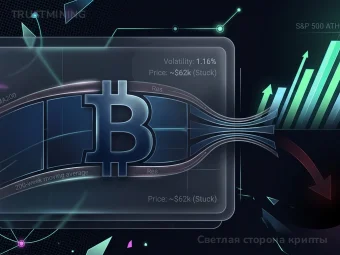

Светлая сторона крипты
Ветры зимы в криптосфере
Почему биткоин застрял на месте, пока фондовый рынок бьет рекорды




A liquidity provider, or LP, is a user or organization that deposits cryptoassets into a liquidity pool. The deposited assets are then used by a DeFi protocol to support swaps, lending, or other operations.
In a typical AMM pool, the provider deposits two or more assets according to the pool requirements. The provider receives a proportional claim on the pool or a specific liquidity position. This position may entitle the provider to a share of transaction fees.
Liquidity-provider returns can come from trading fees and, in some protocols, additional incentives. However, the displayed yield does not represent guaranteed profit. The final result depends on fees, asset-price changes, token incentives, costs, and the risks of the underlying protocol.
The most important market-specific risk is impermanent loss. When the relative price of pool assets changes, the composition of the provider position changes because traders arbitrage the pool against external markets.
Some protocols issue special liquidity tokens representing the provider position. These tokens may themselves be deposited into another protocol as part of yield farming. Other protocols represent liquidity positions directly through smart contracts.
Before providing liquidity, users should examine pool composition, fees, withdrawal rules, incentives, contract security, market liquidity, and the potential effect of asset-price changes. A high advertised APY does not remove these risks.
Popular models

Brands


Fluminer

ElphaPex

Ebang

Canaan

Todek

Bitdeer

iPollo

Baikal

StrongU

VolcMiner

MicroBT

Lucky Miner

Jasminer

Auradine

Innosilicon

IceRiver

Hummer Miner

Holic

Heatbit

Goldshell

FusionSilicon

Bitaxe

Bitfily

Digital Shovel

Dayun

Bolon Miner

Braiins

BW

Halong Mining

Bitfury

Spondoolies

PinIdea

Pantech

Obelisk

DragonBall Miner

FFMiner

ForestMiner

GMO miner