Advertisements
Top weekly article
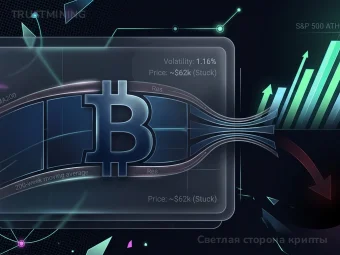

Светлая сторона крипты
Ветры зимы в криптосфере
Почему биткоин застрял на месте, пока фондовый рынок бьет рекорды




A validator is a participant in a Proof-of-Stake blockchain that performs protocol-defined functions for verifying and maintaining network state. Depending on the blockchain, a validator may propose new blocks, vote on blocks proposed by other participants, participate in finalization, or perform other consensus operations.
A validator usually needs a certain amount of its own or delegated stake to participate. This capital acts as economic security for the validator's behavior. Correct and available validators may receive staking rewards, while certain protocol violations or failures may lead to penalties or slashing.
What a validator does
- maintains a functioning blockchain node;
- receives and validates network data;
- participates in block production or confirmation;
- signs protocol messages when required;
- maintains reliable network connectivity;
- monitors software and infrastructure;
- protects the keys required for validator operations.
Running a validator requires more technical responsibility than simply delegating coins. The operator must maintain a validator node, update software, secure keys, monitor server availability, and respond to network events.
Validator and delegator
A delegator can assign economic weight to a selected validator without operating the infrastructure itself. The validator performs the technical work, while the delegator receives a share of available rewards after the validator's commission and protocol rules are applied.
Choosing a validator therefore involves more than looking at the advertised reward rate. Reliability, commission, operational history, stake concentration, protocol rules, and penalty exposure can all matter. Past performance does not guarantee future results.
Popular models

Brands


Fluminer

ElphaPex

Ebang

Canaan

Todek

Bitdeer

iPollo

Baikal

StrongU

VolcMiner

MicroBT

Lucky Miner

Jasminer

Auradine

Innosilicon

IceRiver

Hummer Miner

Holic

Heatbit

Goldshell

FusionSilicon

Bitaxe

Bitfily

Digital Shovel

Dayun

Bolon Miner

Braiins

BW

Halong Mining

Bitfury

Spondoolies

PinIdea

Pantech

Obelisk

DragonBall Miner

FFMiner

ForestMiner

GMO miner