Advertisements
Top weekly article
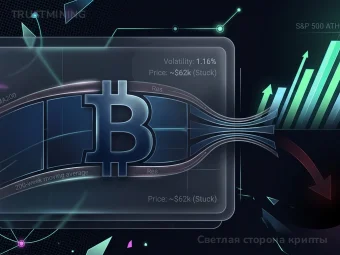

Светлая сторона крипты
Ветры зимы в криптосфере
Почему биткоин застрял на месте, пока фондовый рынок бьет рекорды




Payout Scheme is the model used by a mining pool to calculate and distribute rewards among participants. It defines which work results are counted, which period they belong to, and how each miner’s share of the distributable income is calculated.
Different schemes can use the same underlying computational data while distributing the resulting cash flow differently over time. The payout model is therefore an important parameter when comparing mining conditions.
Common Models
| Scheme | Principle | What Is Counted |
|---|---|---|
| PPS | Payment for each accepted share | Accepted shares and calculated work value |
| PPLNS | Reward distribution based on recent shares | Shares within a defined window |
| FPPLNS | PPLNS variant with a fixed rule | Shares within a fixed calculation window |
| Solo Pool | Reward when the participant finds a block | Actual block discovery |
Why the Payout Scheme Matters
The same miner can receive a different payment pattern depending on the payout scheme. Under PPS, payments are directly connected to accepted shares and can therefore be more regular. Under PPLNS, the result is more closely connected to the pool’s actual block discoveries and the participant’s contribution within the relevant window.
The payout scheme does not change the underlying network block reward or create additional computing power. It determines how the economic result is allocated between the pool and its participants.
What to Check in Pool Rules
- the exact payout formula;
- which shares are counted;
- the size and duration of the calculation window;
- the pool fee;
- payout processing rules;
- the minimum payout threshold;
- rules applied when a block is found or a job changes.
Popular models

Brands


Fluminer

ElphaPex

Ebang

Canaan

Todek

Bitdeer

iPollo

Baikal

StrongU

VolcMiner

MicroBT

Lucky Miner

Jasminer

Auradine

Innosilicon

IceRiver

Hummer Miner

Holic

Heatbit

Goldshell

FusionSilicon

Bitaxe

Bitfily

Digital Shovel

Dayun

Bolon Miner

Braiins

BW

Halong Mining

Bitfury

Spondoolies

PinIdea

Pantech

Obelisk

DragonBall Miner

FFMiner

ForestMiner

GMO miner