Advertisements
Top weekly article
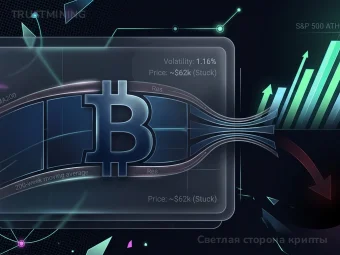

Светлая сторона крипты
Ветры зимы в криптосфере
Почему биткоин застрял на месте, пока фондовый рынок бьет рекорды




Pay Per Share (PPS) is a mining-pool payout scheme in which a participant receives a calculated reward for every accepted share. The payment is determined using a formula based on the expected value of the computational work and relevant network parameters.
How PPS Works
The miner performs computations and submits shares to the pool. Once a share is accepted, the system credits the participant with the corresponding amount. The payout for a particular share does not necessarily depend on whether the pool has just found a block at that moment.
As a result, the pool operator assumes a significant portion of the variation between the actual timing of block discoveries and the statistically expected block frequency. The participant is credited according to accepted work while the pool manages the difference between credited amounts and actual block rewards received by the pool.
What Can Be Included in the Calculation
- network difficulty;
- share difficulty;
- block reward;
- expected block frequency;
- pool fee;
- the specific PPS implementation.
PPS vs. PPLNS
The main difference from PPLNS is the timing and basis of reward calculation. Under PPS, the accepted share receives a calculated value directly according to the PPS model. Under PPLNS, the reward depends on the participant’s contribution within a defined set of recent shares associated with a block found by the pool.
For this reason, comparing pools based only on their percentage fee is insufficient. The payout formula and the conditions used to calculate the value of work should also be considered.
Popular models

Brands


Fluminer

ElphaPex

Ebang

Canaan

Todek

Bitdeer

iPollo

Baikal

StrongU

VolcMiner

MicroBT

Lucky Miner

Jasminer

Auradine

Innosilicon

IceRiver

Hummer Miner

Holic

Heatbit

Goldshell

FusionSilicon

Bitaxe

Bitfily

Digital Shovel

Dayun

Bolon Miner

Braiins

BW

Halong Mining

Bitfury

Spondoolies

PinIdea

Pantech

Obelisk

DragonBall Miner

FFMiner

ForestMiner

GMO miner