Advertisements
Top weekly article
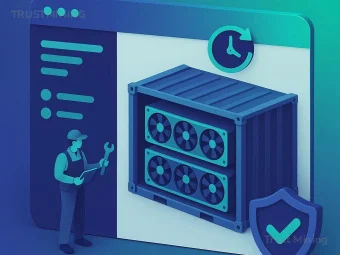




Remote Management is a system of tools and procedures used to monitor, configure, and control mining hardware and related infrastructure through a network connection.
For large mining sites, remote management allows operators to control many devices from a centralized interface. Depending on the available systems, an operator can monitor equipment status, identify offline devices, change operating parameters, and restart individual miners without physically accessing them.
What Can Be Monitored
- current hashrate;
- temperature and device status;
- power consumption when supported by the monitoring system;
- network connection status;
- hardware errors;
- frequency and performance settings;
- device restart and recovery status.
How Remote Management Works
A miner connects to the local network, allowing a management platform to collect telemetry and expose controls to the operator. Depending on the hardware, management may be provided through a web interface, dedicated software, or a centralized fleet-management platform.
Large installations can automatically detect offline devices and generate alerts. This reduces the time between a failure and the operator response.
Security
Remote access must be protected because administrative access to a miner can allow changes to operating parameters and mining destinations. Authentication, access restrictions, secure communication, and network segmentation can be used to reduce unauthorized access risks.
Importance for Large Mining Operations
Manual management may be practical for a small number of devices but becomes increasingly inefficient as the fleet grows. Remote management is therefore an important part of large mining farms and remote mining sites.
Popular models

Brands


Aisen

iPollo

Bitdeer

ElphaPex

Todek

Heatbit

Jasminer

Lucky Miner

FusionSilicon

Ebang

Canaan

Braiins

VolcMiner

Bitfily

Baikal

Obelisk

StrongU

Auradine

MicroBT

Innosilicon

IceRiver

Holic

Hummer Miner

Goldshell

Bitaxe

ForestMiner

Bolon Miner

Dayun

Digital Shovel

BW

Bitfury

Spondoolies

PinIdea

Pantech

DragonBall Miner

FFMiner

GMO miner

Halong Mining