Advertisements
Top weekly article
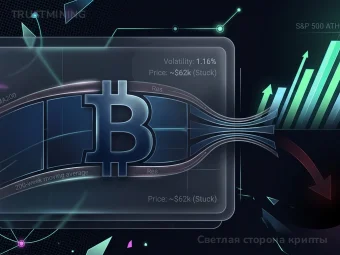

Светлая сторона крипты
Ветры зимы в криптосфере
Почему биткоин застрял на месте, пока фондовый рынок бьет рекорды




Liquidity mining is a mechanism that rewards users for supplying assets to DeFi liquidity pools. The additional rewards are commonly distributed in protocol tokens or other assets according to predefined rules.
The main purpose of liquidity mining is to attract capital and increase available liquidity. Deeper liquidity can improve trading conditions, reduce price impact, and make a protocol more useful to other participants.
A typical process begins when a user deposits assets into an eligible pool. The protocol tracks the user position and calculates rewards based on factors such as the amount supplied, duration, pool allocation, and current incentive schedule.
Liquidity mining should be distinguished from ordinary trading-fee income. Trading fees arise from user activity, while liquidity-mining rewards are additional incentives funded according to the protocol design. A liquidity provider can receive both simultaneously.
Liquidity-mining rewards are not risk-free. The reward token can lose value, emissions can dilute existing holders, and the underlying liquidity position can experience impermanent loss. Smart-contract and governance risks also remain.
Liquidity mining is often used as one component of yield farming. Rewards can be reinvested into the same protocol or deployed into another protocol, creating increasingly complex strategies.
Popular models

Brands


Fluminer

ElphaPex

Ebang

Canaan

Todek

Bitdeer

iPollo

Baikal

StrongU

VolcMiner

MicroBT

Lucky Miner

Jasminer

Auradine

Innosilicon

IceRiver

Hummer Miner

Holic

Heatbit

Goldshell

FusionSilicon

Bitaxe

Bitfily

Digital Shovel

Dayun

Bolon Miner

Braiins

BW

Halong Mining

Bitfury

Spondoolies

PinIdea

Pantech

Obelisk

DragonBall Miner

FFMiner

ForestMiner

GMO miner