Advertisements
Top weekly article
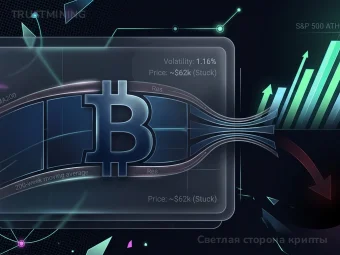

Светлая сторона крипты
Ветры зимы в криптосфере
Почему биткоин застрял на месте, пока фондовый рынок бьет рекорды




A DAO, or Decentralized Autonomous Organization, is an organizational model in which governance and decision-making are implemented using blockchain, smart contracts, and voting mechanisms. DAOs are commonly used to govern DeFi protocols, treasury assets, protocol parameters, and ecosystem development.
DAO participants can submit proposals, discuss them, and vote on their adoption. Depending on the system, voting power may be based on governance tokens, delegated voting rights, reputation, or another mechanism. Therefore, holding a governance token does not necessarily mean that every participant has equal influence.
Governance proposals can change protocol fees, risk parameters, supported assets, treasury allocations, contract upgrades, or other rules. In some systems, a successful vote is executed automatically by a smart contract. In others, an additional execution process or administrator is required.
Many DAOs control a treasury containing cryptoassets. Treasury operations may be protected through multisig wallets, timelocks, or other mechanisms. The actual level of automation therefore depends on the DAO architecture.
A DAO does not automatically guarantee complete decentralization. Governance tokens can be concentrated among a small number of holders, important technical components can remain under limited control, and low voter participation can result in significant differences between nominal and practical governance power.
In DeFi, a DAO can serve as a governance layer around an otherwise automated financial protocol. The protocol can execute financial operations through smart contracts while the DAO determines longer-term parameters and development decisions.
Core DAO components
- Proposal — a proposed action or change.
- Governance — the rules and mechanisms for collective decision-making.
- Voting — the process used to approve or reject proposals.
- Treasury — assets controlled by the organization.
- Execution — the mechanism that applies an approved decision.
Popular models

Brands


Fluminer

ElphaPex

Ebang

Canaan

Todek

Bitdeer

iPollo

Baikal

StrongU

VolcMiner

MicroBT

Lucky Miner

Jasminer

Auradine

Innosilicon

IceRiver

Hummer Miner

Holic

Heatbit

Goldshell

FusionSilicon

Bitaxe

Bitfily

Digital Shovel

Dayun

Bolon Miner

Braiins

BW

Halong Mining

Bitfury

Spondoolies

PinIdea

Pantech

Obelisk

DragonBall Miner

FFMiner

ForestMiner

GMO miner