Advertisements
Top weekly article
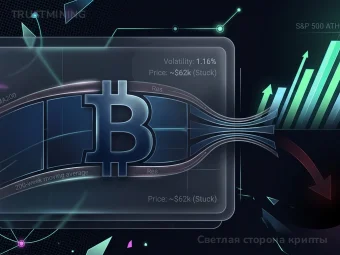

Светлая сторона крипты
Ветры зимы в криптосфере
Почему биткоин застрял на месте, пока фондовый рынок бьет рекорды




Crypto inflation, in the context of tokenomics, generally refers to an increase in an asset’s supply caused by the issuance of new units. A meaningful analysis considers not only the absolute amount issued but also the amount relative to the existing supply.
A simplified annual inflation rate can be estimated as net supply growth during a period divided by the supply at the beginning of that period. Actual protocol-specific calculations can be more complex.
Issuance vs. net inflation
New issuance does not necessarily produce the same amount of net supply growth. If a protocol simultaneously performs token burns, the final increase in supply can be smaller or even negative.
It is therefore useful to distinguish gross issuance from net supply change when analyzing tokenomics.
Why inflation matters
Issuance affects how new units are distributed and can change the relative share of existing holders. Inflation alone does not determine an asset’s price, which also depends on demand, utility, liquidity, and other market factors.
Popular models

Brands


Fluminer

ElphaPex

Ebang

Canaan

Todek

Bitdeer

iPollo

Baikal

StrongU

VolcMiner

MicroBT

Lucky Miner

Jasminer

Auradine

Innosilicon

IceRiver

Hummer Miner

Holic

Heatbit

Goldshell

FusionSilicon

Bitaxe

Bitfily

Digital Shovel

Dayun

Bolon Miner

Braiins

BW

Halong Mining

Bitfury

Spondoolies

PinIdea

Pantech

Obelisk

DragonBall Miner

FFMiner

ForestMiner

GMO miner